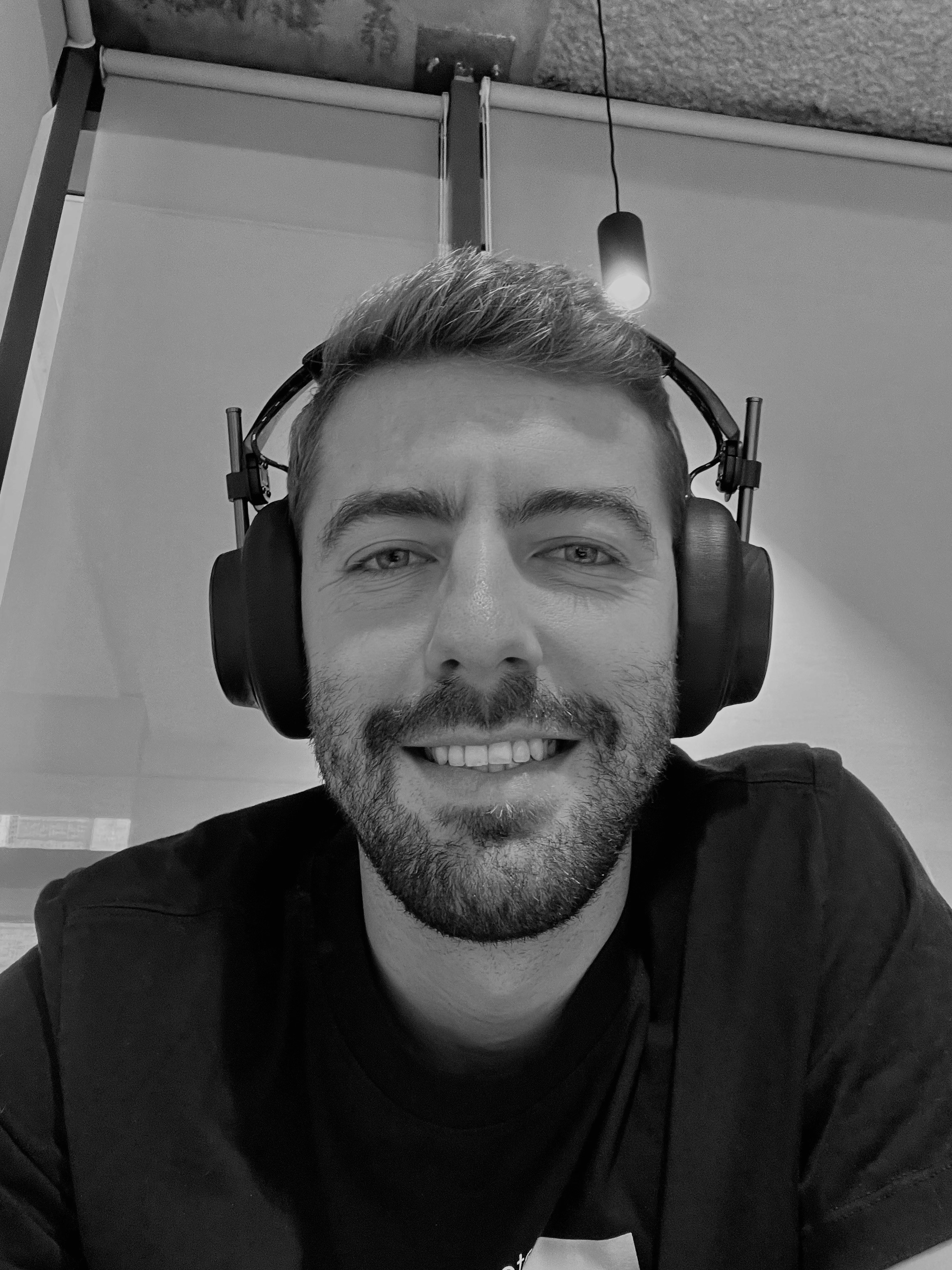
Product Designer

Product Designer

Product Designer

Navigating quality ai workflows and zero to one projects.

Navigating quality ai workflows and zero to one projects.

Navigating quality ai workflows and zero to one projects.

Tel-Aviv, IL

Tel-Aviv, IL

Tel-Aviv, IL

Multidisciplinary designer working with hardware, wearables, and more.

Why Harbour Molds Lines by Masterworks yet Sessions

Happy place: knowing what I'm designing, plus noise cancellation

Why Harbour Molds Lines by Masterworks yet Sessions

How Market.org Raisedup these RATE as 2x from Pathguide.

I make purpose popular.

I make purpose popular.

I'm always the person in the room asking why. Why are we doing this? Why does it matter? Where does it affect? Purpose, for me, isn't a poster on the wall. It's the reason every resource spent has a direction. Even when things change, you should always be moving toward something, not just reacting to today's loudest thought.

The "popular" part has two sides. Internally, I make purpose accessible. I bring it into the conversation, simplify it, use metaphors until it feels obvious to everyone in the room. Externally, I make it consumable for the people using what we build. A product without purpose has no real story, just a collection of features. And a weak story means a weak product.

I'm always the person in the room asking why. Why are we doing this? Why does it matter? Where does it affect? Purpose, for me, isn't a poster on the wall. It's the reason every resource spent has a direction. Even when things change, you should always be moving toward something, not just reacting to today's loudest thought.

The "popular" part has two sides. Internally, I make purpose accessible. I bring it into the conversation, simplify it, use metaphors until it feels obvious to everyone in the room. Externally, I make it consumable for the people using what we build. A product without purpose has no real story, just a collection of features. And a weak story means a weak product.

I'm always the person in the room asking why. Why are we doing this? Why does it matter? Where does it affect? Purpose, for me, isn't a poster on the wall. It's the reason every resource spent has a direction. Even when things change, you should always be moving toward something, not just reacting to today's loudest thought.

The "popular" part has two sides. Internally, I make purpose accessible. I bring it into the conversation, simplify it, use metaphors until it feels obvious to everyone in the room. Externally, I make it consumable for the people using what we build. A product without purpose has no real story, just a collection of features. And a weak story means a weak product.

For the past 7 years, I have solved all types of problems for product teams and stakeholders. I explored, researched, and designed experiences and layouts, but I also designed work methodologies, internal brain systems, design processes, and, more recently, AI-integrated workflows and product experiences. Year after year, I proved that design should be at the forefront when it comes to leading a brand and a company. Designful products are built beyond our positions, titles, and years of experience. They are built on mountains of trust and inspiration, and the best ideas should lead. That's where I want to work.

For the past 7 years, I have solved all types of problems for product teams and stakeholders. I explored, researched, and designed experiences and layouts, but I also designed work methodologies, internal brain systems, design processes, and, more recently, AI-integrated workflows and product experiences. Year after year, I proved that design should be at the forefront when it comes to leading a brand and a company. Designful products are built beyond our positions, titles, and years of experience. They are built on mountains of trust and inspiration, and the best ideas should lead. That's where I want to work.

For the past 7 years, I have solved all types of problems for product teams and stakeholders. I explored, researched, and designed experiences and layouts, but I also designed work methodologies, internal brain systems, design processes, and, more recently, AI-integrated workflows and product experiences. Year after year, I proved that design should be at the forefront when it comes to leading a brand and a company. Designful products are built beyond our positions, titles, and years of experience. They are built on mountains of trust and inspiration, and the best ideas should lead. That's where I want to work.

What is good design to me?

What is good design to me?

What is good design to me?

Good design does not depend so much on the eye of the beholder but on a combination of aesthetics and ethics. Good design exhibits virtues. What virtues? You know, good old-fashioned virtues like generosity, courage, diligence, honesty, substance, clarity, curiosity, thriftiness, and wit.

By contrast, bad design exhibits human vices like selfishness, fear, laziness, deceit, pettiness, confusion, apathy, wastefulness, and stupidity. In other words, we want the same things from design that we want from our fellow humans. When we combine ethical virtues with aesthetic virtues, we get good design. The ancient Greeks framed this ideal in the context of knowing, making, and doing: "To know truth. To make beauty. To do good”.

Good design does not depend so much on the eye of the beholder but on a combination of aesthetics and ethics. Good design exhibits virtues. What virtues? You know, good old-fashioned virtues like generosity, courage, diligence, honesty, substance, clarity, curiosity, thriftiness, and wit.

By contrast, bad design exhibits human vices like selfishness, fear, laziness, deceit, pettiness, confusion, apathy, wastefulness, and stupidity. In other words, we want the same things from design that we want from our fellow humans. When we combine ethical virtues with aesthetic virtues, we get good design. The ancient Greeks framed this ideal in the context of knowing, making, and doing: "To know truth. To make beauty. To do good”.

Good design does not depend so much on the eye of the beholder but on a combination of aesthetics and ethics. Good design exhibits virtues. What virtues? You know, good old-fashioned virtues like generosity, courage, diligence, honesty, substance, clarity, curiosity, thriftiness, and wit.

By contrast, bad design exhibits human vices like selfishness, fear, laziness, deceit, pettiness, confusion, apathy, wastefulness, and stupidity. In other words, we want the same things from design that we want from our fellow humans. When we combine ethical virtues with aesthetic virtues, we get good design. The ancient Greeks framed this ideal in the context of knowing, making, and doing: "To know truth. To make beauty. To do good”.

Context

No two problems share the same layers, even within the same company. Every project carries its own ecosystem: technical feasibility, emotional climate, legal boundaries, market timing, brand implications. I've developed a strong ability to read these layers simultaneously, see how they interact, and hold the full complexity of a problem without flattening it. And when the product is built for millions of people, the emotional layer is never just a detail. It's often the whole point.

Purpose

Purpose is what separates a pixel pusher from a designer with vision. Components are functional. Experiences have a destination, a cycle of movement, improvement, and change. Spotify didn't just organize your music library; it changed how you listen, what you discover, who you become as a listener. That's purpose at work. For me, purpose means having the ability to see a non-existent future and lead people toward it: users, teams, and organizations alike. It doesn't matter if I'm designing for an industry I love or one I'm learning from scratch. I've trained myself to form a vision for any problem I work on, and to hold that vision clearly enough that others can see it too.

Process

All the context, all the talent, all the resources, and companies still default to the safest option. I've seen it too many times. Good process is built on trust, honesty, and the courage to say "this isn't good enough." But more than anything, it means spending your energy on what makes you unreplicable, not on benchmarking against competitors. Every industry has a baseline. The interesting work happens past it. And it has to stay dynamic. This industry moves too fast for rigid frameworks. Even saying the word "process" feels like a risk, and that's exactly the point.

The best place to work in

The best place to work in

"I am not interested in managing a clothing factory. What you need, and I would like to run, is a craftsman's workshop, in which we would recruit the very best people in the trade, to reestablish in Paris a salon for the greatest luxury and the highest standards of workmanship. It will cost a great deal of money and entail much risk." - Christian Dior

"I am not interested in managing a clothing factory. What you need, and I would like to run, is a craftsman's workshop, in which we would recruit the very best people in the trade, to reestablish in Paris a salon for the greatest luxury and the highest standards of workmanship. It will cost a great deal of money and entail much risk." - Christian Dior

"I am not interested in managing a clothing factory. What you need, and I would like to run, is a craftsman's workshop, in which we would recruit the very best people in the trade, to reestablish in Paris a salon for the greatest luxury and the highest standards of workmanship. It will cost a great deal of money and entail much risk." - Christian Dior

The best place to work in

I'm open to exciting opportunities in design leadership and ai. Ping me for design-coffee or design presentations.

ככdddכ

Copy Email

I'm open to exciting opportunities in design leadership and ai. Ping me for design coffee or design presentations.

Copy Email

Serg © 2026

I'm open to exciting opportunities in design leadership and ai. Ping me for design-coffee or design presentations.

ככdddכ

Copy Email